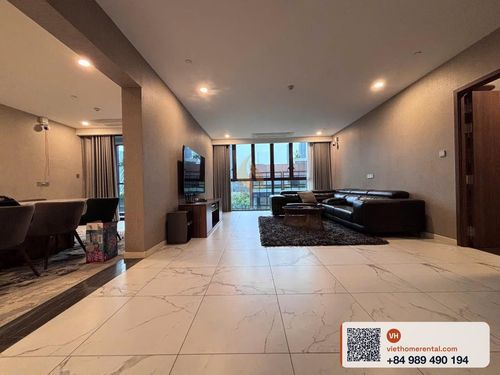
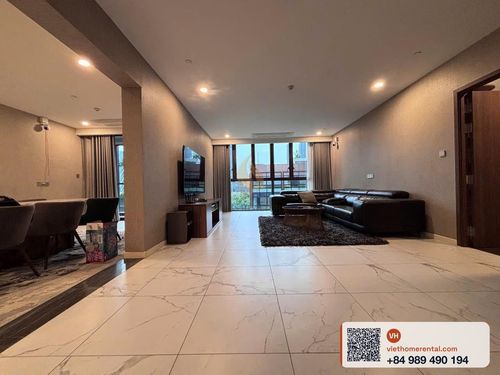
Co-living in Vietnam means renting a private, furnished bedroom in a shared house or building, with utilities, Wi-Fi, cleaning and community events bundled into one monthly price. In Ho Chi Minh City, private rooms are listed from roughly $370 to $850 a month. Hanoi and Da Nang run a little cheaper. Most operators want a one-month minimum stay.
That makes co-living a strong first base for digital nomads and new arrivals. Once you know the city and plan to stay six months or more, a 1-bedroom apartment or a shared 2-bedroom is often similar money for far more space. Below are prices, neighborhoods and contract details for Saigon, Hanoi and Da Nang, so you can decide which fits.
What is co-living in Vietnam?
A co-living space is part guesthouse, part flatshare. You get:
- A private bedroom, usually furnished and sometimes with a private bathroom
- Shared spaces: kitchen, living room, often a rooftop or work area
- Services in the rent: electricity, water, Wi-Fi, room cleaning, often laundry
- A built-in community: other residents (mostly remote workers and expats) plus organized dinners or events
Many Vietnamese co-livings are converted townhouses or villas with fewer than ten rooms, not big purpose-built towers. That matters: the vibe depends heavily on the house and who lives there that month.
If you searched "Hanoi colocation" (the French term), you're looking at the same idea. In Hanoi you'll also find informal house-shares where one tenant leases a whole house and sublets rooms. That's cheaper, but you get fewer services and less protection.
How much does co-living cost in Vietnam in 2026?
Prices below are listed "from" rates for a private room on a monthly stay, gathered from operator sites and listing platforms in 2026. Expect to pay more for a private bathroom, a balcony, or a stay shorter than a month.
| City | Typical private room (monthly) | Notes |
|---|---|---|
| Ho Chi Minh City | ~$370–$850 | District 1 / Tân Định / Thảo Điền at the top of the range |
| Hanoi | ~$300–$700 | Tây Hồ (West Lake) has the most options |
| Da Nang | ~$400–$750 | Around An Thượng / Mỹ An, near My Khe beach |
For a concrete example: Kolab Living in Saigon lists rooms from $500/month at its Đa Kao townhouse and from $600/month in Tân Định. That price includes all utilities, weekly cleaning, linen changes and laundry, with a one-month minimum stay.
Rule of thumb: compare a co-living quote with a regular apartment plus what you'd pay for electricity, internet and cleaning on your own. Then decide whether the community is worth the difference.
Co-living vs 1-bedroom apartment vs serviced apartment: which is cheaper?
Here's how the options compare in Ho Chi Minh City, using our own inventory for the apartment columns. The apartment prices are based on VietHome's live listings, Oct 2026.
| Co-living room | 1-bedroom apartment | 2-bedroom, shared with a friend | Serviced apartment | |
|---|---|---|---|---|
| Monthly price | ~$370–$850 | From $577, median ~$980 | District 4 median ~$885 → ~$440 each | Usually above a standard apartment of the same size |
| Bills included? | Yes, usually all | No, paid separately | No | Usually yes |
| Space | 1 private room + shared areas | 45–65 m² | Own bedroom + full apartment | Varies |
| Minimum stay | ~1 month | Usually 6–12 months | Usually 6–12 months | Often 1 month+ |
| Community | Built in | None | Your flatmate | Minimal |
| Building facilities | Varies by house | Pool/gym in most projects | Pool/gym in most projects | Varies |
What the numbers show:
- Under 3 months: co-living almost always wins. There's no furnishing to buy, no utility accounts to set up, and you're not locked into a long lease.
- 6–12 months, living alone: a 1-bedroom apartment gives you several times the space. Of our 20 current 1-bedroom listings, 11 rent for $1,000 or less, including units in Thảo Điền from about $730.
- 6–12 months, with a friend or partner: sharing a 2-bedroom is often the best value. We currently have 43 two-bedroom apartments at $1,000 or less, many in District 4, which is a 5–10 minute ride to District 1.
Where to find co-living in Ho Chi Minh City
- District 1 & Tân Định / Đa Kao: walkable and central, with the most cafés and nightlife. Rooms here are at the top of the price range.
- Thảo Điền (District 2): the expat village, green and quieter, with international cafés and grocers. It works well if you want an English-speaking bubble. See Thảo Điền apartments.
- Bình Thạnh: between D1 and Thảo Điền, more local and better value, with good access to both. See Bình Thạnh.
- District 3: leafy streets, old villas and café culture, close to D1 without the noise.
Where to find co-living in Hanoi
- Tây Hồ (West Lake): the center of Hanoi's expat and nomad scene. You'll find the most co-livings, cafés and coworking spaces here. Our Tây Hồ guide covers the area in depth.
- Ba Đình: calm and leafy, near Tây Hồ, with fewer foreigners and lower prices.
- Hoàn Kiếm (Old Quarter): the most atmosphere and the most noise. Good for a short first stay.
Where to find co-living in Da Nang
- An Thượng / Mỹ An: a few blocks from My Khe beach, with the densest cluster of nomad cafés, gyms and coworking spaces. This is where most co-livings are.
- Sơn Trà: closer to the peninsula and fishing-village beaches. It's quieter and a little cheaper.
Planning a longer stay in Da Nang? Read our Da Nang apartment guide for digital nomads.
How do I choose a good co-living space?
Visit, or at least video-call, before paying. Then check:
- What "all-inclusive" really covers. Some houses cap electricity, which matters if you run the air conditioning all day. Ask for the cap in writing.
- Wi-Fi speed. Ask for a recent speed test and whether there's a backup line. Remote workers should also ask about a quiet work area.
- Room vs. house rules. Check the policies on guests, quiet hours, cooking and pets.
- Who lives there now. Ask about age range, mix of nationalities, and typical stay length. A house of 2-week travelers feels very different from one of 6-month residents.
- Noise and location. Check for nearby bars, karaoke and construction. Look at the street at night if you can.
- Cancellation and deposit terms. Find out how much notice you must give and when the deposit is returned.
What contract, deposit and paperwork should I expect?
Contract. Co-livings usually use a short house agreement rather than a full apartment lease. Read it for the notice period and what happens if you leave early.
Deposit. Ask for the amount and refund conditions in writing before you transfer anything. For comparison, standard apartment leases in HCMC usually ask for 1–2 months' rent as a deposit. Our rental deposit guide explains how to get yours back.
Temporary residence registration. Vietnam requires every foreigner's stay to be declared to the local police. From 24 July 2026, Circular 87 of the Ministry of Public Security requires accommodation providers to register foreign guests immediately on arrival, either online or with Form NA17. Paper declarations must reach the commune police within 12 hours.
A professional co-living operator should handle this for you. If a house says "no need", treat it as a red flag, because the registration is linked to your visa and residence records. Hand over your passport details on day one and ask for confirmation.
Visa. Co-living doesn't change your visa situation. Many nomads use Vietnam's e-visa, valid for up to 90 days. Check current rules before you book long stays.
Pros and cons of co-living in Vietnam
Pros
- Move in with one suitcase and one payment
- Instant social circle, which helps a lot in your first month
- Flexible: monthly terms, easy to switch cities
- No utility bills, internet contracts or furniture to deal with
Cons
- More expensive per square meter than renting an apartment
- Shared kitchen and living room, with limited privacy
- Quality and vibe vary a lot from house to house
- Few have the pool, gym and security of a modern apartment project
Who is co-living best for?
A good fit:
- Digital nomads staying 1–3 months
- First-timers who want friends and local tips fast
- People testing a city before committing to a lease
Look at apartments instead if you:
- Plan to stay 6 months or longer
- Work from home and need quiet and space
- Live with a partner or family
- Want building facilities like a pool and gym
A common path we see: one or two months in co-living, then a 6- or 12-month apartment lease once you know which neighborhood you love. If you're between the two, a 3–6 month mid-term rental is the middle ground.
FAQ
Is co-living in Vietnam worth it?
For stays under three months, usually yes. You pay a premium per square meter, but you save on setup, bills and loneliness. For six months or more, a 1-bedroom or shared 2-bedroom apartment typically gives better value.
How much is co-living in Ho Chi Minh City per month?
Private rooms are listed from about $370 to $850 a month in 2026, with utilities and cleaning usually included. Central District 1, Tân Định and Thảo Điền sit at the top of the range.
Is co-living cheaper than renting a studio in Saigon?
Not per square meter. Once you add electricity, internet and cleaning to an apartment, a co-living room can come out close for short stays. In our Oct 2026 listings, 1-bedroom apartments start at $577 and sharing a 2-bedroom in District 4 works out to roughly $440 each.
Where is the best area for co-living in Hanoi?
Tây Hồ (West Lake) has the largest concentration of co-living spaces, cafés and coworking spaces. Ba Đình is a quieter, cheaper alternative nearby. Hoàn Kiếm suits a short, central first stay.
Do I need to register my address when staying in co-living?
Yes. The accommodation provider must declare your temporary residence to the local police when you arrive. Since 24 July 2026 this must happen immediately, online or with Form NA17. Make sure your host does it and confirms with you.
Ready for your own place after co-living? VietHome has 1-bedroom apartments and studios across Saigon with flexible terms. Our English- and Chinese-speaking agents reply within 2 hours. Browse all apartments on the map or message us, and tell us your budget and move-in date.