Short answer: In Vietnam, a foreigner's temporary residence is declared by whoever runs the place where they stay, not by the foreigner. For a rented apartment, that means the landlord, or a manager or agent the landlord has authorised. Under the procedure in force since 24 July 2026, the declaration goes on the Ministry of Public Security's electronic system as soon as the tenant arrives, or on paper form NA17 delivered to the ward or commune police within 12 hours. A landlord who skips it can be fined 3-5 million VND for one to three foreigners, and up to 20 million VND for nine or more.
In Vietnamese this is called khai báo tạm trú cho người nước ngoài, and in English it often goes by "temporary residence registration". Below: who files it, what tenants need to hand over, how landlords declare online or on paper, what changed in 2026, and the fines.
The rules at a glance
| What the rules say | |
|---|---|
| Who files it | The person who directly manages the accommodation: the owner, the owner's legal representative, or someone they have authorised |
| Who must be declared | Every foreigner staying overnight, whether in a hotel, a rented apartment or a private home |
| Deadline online | As soon as the foreigner arrives |
| Deadline on paper | Form NA17 to the ward or commune police within 12 hours (24 hours in remote areas) |
| What is declared | Name, gender, date of birth, nationality, passport number, validity of the visa or residence card, expected length of stay |
| Fine for not declaring | 3-5M VND for 1-3 foreigners, 10-15M VND for 4-8, 15-20M VND for 9 or more |
Based on Article 33 of the Law on Entry, Exit, Transit and Residence of Foreigners in Vietnam, Circular 87/2026/TT-BCA and Decree 282/2025/NĐ-CP.
What is temporary residence declaration in Vietnam?
Article 33 of Vietnam's 2014 Law on Entry, Exit, Transit and Residence of Foreigners (as amended) requires every foreigner staying in the country to be declared to the local police, through the person who runs the place where they stay. The law calls that place an "accommodation establishment" (cơ sở lưu trú), and the term is broad: hotels and guesthouses, but also rented houses, apartments and private homes. If you rent an apartment, it counts as your accommodation establishment, and your landlord is the one who declares you.
Two things it is not:
- It is not the Temporary Residence Card (TRC, thẻ tạm trú). The TRC is a separate residence document. The declaration is not a card or a permit: it is the police record of the address where you are staying.
- It is not thông báo lưu trú. That is the procedure for Vietnamese citizens under the Law on Residence. For foreigners, the legal term is khai báo tạm trú, even though many people search for "khai báo lưu trú cho người nước ngoài".
Who has to declare a foreign tenant: the landlord or the tenant?
The landlord. The law puts the duty on the person who directly manages the accommodation, and the foreigner is declared through them. Circular 87/2026/TT-BCA spells out who that person can be: the owner, the owner's legal representative, or someone the owner has authorised.
For a rented apartment in Ho Chi Minh City, that usually works out like this:
- The owner manages the apartment personally: the owner files.
- The owner lives abroad or uses a property manager: the manager or agent can file, as long as the owner has authorised them. Put that authorisation in writing, in the lease, the management contract or a separate letter, so neither side assumes the other has done it.
- Serviced apartments and aparthotels: the operator files, just as a hotel does.
The tenant's part is small but it matters: give the landlord your passport and your visa or residence card when you move in. The person filing needs them to check your papers and fill in the declaration.
What changed in 2026?
Guides written before this year are out of date on three points:
- Higher fines from 15 December 2025. Decree 282/2025/NĐ-CP replaced Decree 144/2021/NĐ-CP. The old fine for not declaring a foreigner was a flat 4-6 million VND. The new fine depends on how many foreigners were not declared and reaches 20 million VND.
- A new procedure from 24 July 2026. Circular 87/2026/TT-BCA, issued on 9 June 2026, sets out how declarations are made and received. Online declarations must be made as soon as the foreigner arrives, and commune and ward police receive them 24 hours a day, 7 days a week. Paper form NA17 remains the alternative.
- One national system. Older guides tell landlords to use their province's immigration police website. Declarations now go through the Ministry of Public Security's national electronic temporary residence declaration system (Hệ thống khai báo tạm trú điện tử).
How to declare a foreign tenant online, step by step
- Register a declaration account, once. On the Ministry of Public Security's electronic system, enter your own details and the property's details as the system asks. If any of them change, update the account straight away.
- Collect the tenant's documents on move-in day: the passport (or other international travel document) and the visa, temporary residence certification or residence card.
- Declare as soon as the tenant arrives. The system asks for the tenant's full name, gender, date of birth, nationality, passport number, the validity of their visa, stay extension or residence card, and how long they expect to stay at your property.
- Update the record when the tenant's papers change: a new passport, a visa extension or a new residence card.
- Keep the account active. An account with no declarations for 12 months is suspended, and so is one found to hold inaccurate information. It is restored when you ask, or once the information is corrected.
The 12-month rule catches long-term landlords. With one tenant on a year-long lease, a whole year can pass without a new declaration, so check the account still works before the next tenant moves in.
Declaring on paper: form NA17 at the ward police
If you can't use the online system, the paper route still works:
- Fill in the temporary residence declaration form, form NA17 (Phiếu khai báo tạm trú), completely and accurately.
- Pass the information to the commune or ward police straight away, by whatever suitable means of contact you have.
- Deliver the form to them within 12 hours of the foreigner's arrival (24 hours in remote areas).
- The police check the form, ask for anything missing, certify it, make a copy and hand it back to you on the spot. They then enter it into the electronic system.
Keep the certified form. It is your proof that the declaration was made.
What are the fines for not declaring a foreigner?
The fines are set by Decree 282/2025/NĐ-CP and fall on the accommodation, which for a rented apartment means the landlord:
| Foreigners not declared | Fine |
|---|---|
| 1 to 3 | 3-5 million VND |
| 4 to 8 | 10-15 million VND |
| 9 or more | 15-20 million VND |
Creating a declaration account with false information carries the same 3-5 million VND fine as the lowest tier.
These fines are enforced. In August 2026, commune police in Bát Xát, Lào Cai province, fined a local resident 4 million VND because one foreign national was staying at the shop she rented without a declaration.
A checklist for tenants
- On move-in day, give your landlord or agent copies of your passport and your visa or residence card.
- Ask for confirmation that the declaration has been made, and keep a screenshot or the certified NA17 form.
- Moving to a new apartment? The new landlord declares you again. The declaration belongs to the address, not to you.
- New passport, visa extension or residence card? Send copies to your landlord so the record can be updated.
- Foreign friends staying over? Overnight stays count too. Agree with your landlord in advance how guests will be declared.
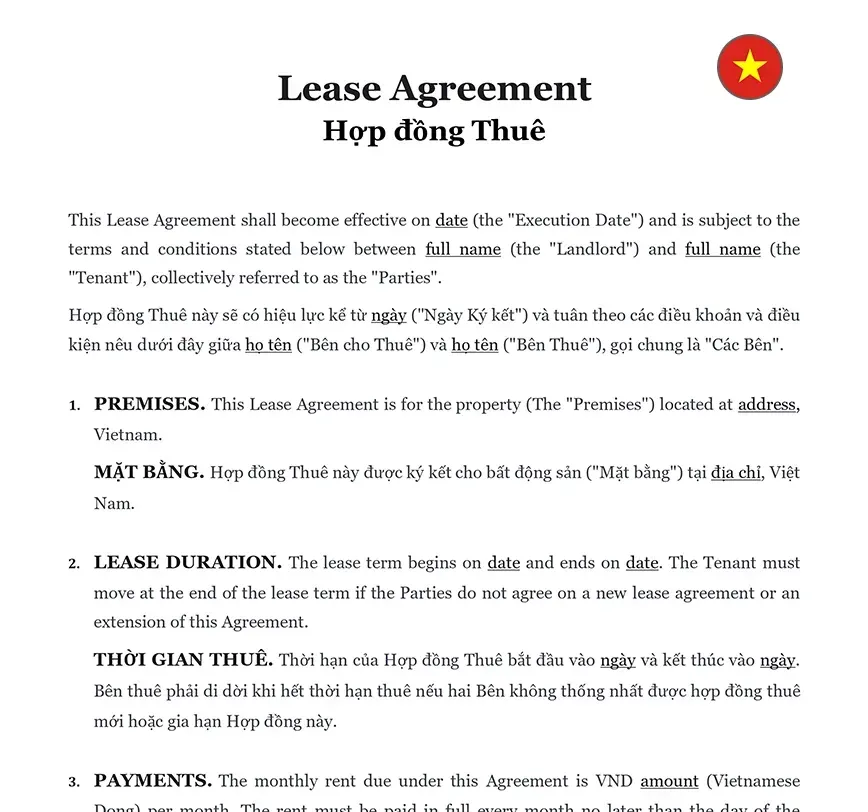
- Check the lease. A good lease says who declares you. Our guide to lease agreements for foreigners lists the clauses to look for.
When you browse apartments with VietHome, ask the agent who will handle the declaration before you sign.
A checklist for landlords
- Register your declaration account before your first foreign tenant, not on move-in day.
- Declare on the day the tenant arrives: online straight away, or on form NA17 within 12 hours.
- Write the duty into the lease. Say who declares the tenant, and that the tenant provides passport and visa copies on time.
- Living abroad? Authorise a manager or agent in writing. Our guide to owning and renting out apartments as a foreigner covers your other duties, and VietHome's property management service can take this on for you.
- Keep the account active, and update it whenever your details change.
FAQ
Do foreigners have to register their own temporary residence?
No. The person who runs the accommodation declares you. Your job is to hand over your passport and your visa or residence card so they can do it.
How long does a landlord have to declare a foreign tenant?
Online, as soon as the tenant arrives. On paper, form NA17 must reach the ward or commune police within 12 hours, or 24 hours in remote areas.
Is temporary residence declaration the same as a TRC?
No. The Temporary Residence Card is a residence document. The declaration is the police record of the address where you are staying, made each time you move in somewhere new.
Can a property manager declare a tenant for an owner who lives abroad?
Yes. Circular 87/2026/TT-BCA allows the owner, the owner's legal representative or an authorised person to declare. Make the authorisation written.
What happens if my landlord never declared me?
The fine falls on the landlord: 3-5 million VND for one to three foreigners. Ask them to file it now. Ward and commune police receive online declarations around the clock.
Renting out an apartment to foreign tenants? List your property with VietHome and we'll help you find tenants. For help with the paperwork, see our legal support service.


