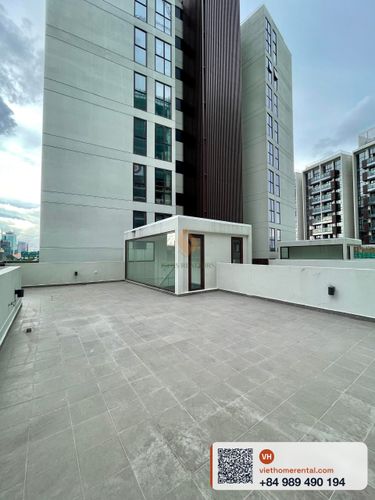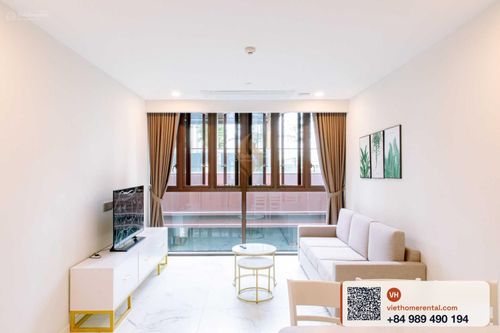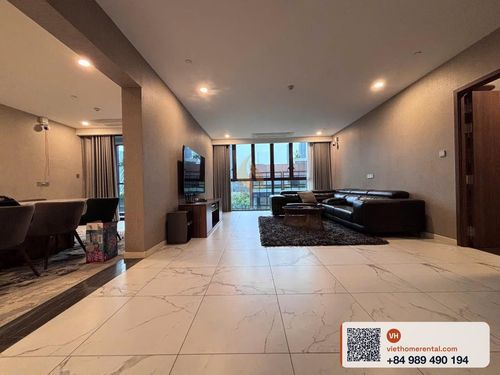
Short answer: Yes. A foreigner who has legally entered Vietnam can buy an apartment in an approved commercial project, own it for 50 years (renewable once), and rent it out. Before each lease you must notify the local People's Committee, and you must declare the rental income for tax. Since 1 January 2026, owners earning up to VND 1 billion a year in rent pay no VAT or personal income tax on it.
This guide is for foreign owners in Ho Chi Minh City and Hanoi, including those who no longer live in Vietnam. It covers what the 2026 rules say, what a typical apartment rents for, and how to run a rental from abroad.
Last updated: October 2026. This is general information, not legal or tax advice. Rules change, so confirm your situation with a licensed lawyer or the local tax office.
Can foreigners own an apartment in Vietnam in 2026?
Yes, under the Housing Law 2023 (Law 27/2023/QH15) and Decree 95/2024/ND-CP, both in force since 1 August 2024. The main conditions:
| Rule | What it means in practice |
|---|---|
| Who qualifies | A foreign individual who has been allowed to enter Vietnam. You need a valid passport with a Vietnamese entry stamp. A work permit or residence card is not required. Diplomats with immunity are excluded. |
| What you can buy | Commercial housing in approved projects only, outside national defence and security zones. Hanoi and HCMC publish lists of eligible projects. |
| Building cap | Foreigners may own at most 30% of the apartments in one building. If several blocks share a basement, the 30% applies to each block. |
| Landed houses | At most 250 houses in an area with the population of one ward (about 10,000 people), counted across all projects in that area. |
| Ownership term | 50 years from the date your certificate (the "pink book") is issued, extendable once for up to 50 more years. |
| Married to a Vietnamese citizen? | If you live in Vietnam with your Vietnamese spouse, you own like a Vietnamese citizen: no 50-year term and no quota. |
Two practical points:
- Check the quota before you pay a deposit. In popular buildings the 30% foreign allowance can already be used up. The developer or the management board should confirm it in writing.
- Make sure the pink book is in your name. The certificate records your ownership term. A sale contract alone is not enough to sign a lease that holds up later.
How does the 50-year leasehold work, and what happens when it ends?
The 50 years start from the date the certificate is issued, not the date the building was finished. To extend, apply to the provincial People's Committee at least three months before expiry. The committee has 30 days to decide, and an extension is for up to another 50 years.
If you don't extend, sell or gift the apartment to an eligible person before the term ends. Who you sell to matters:
- Vietnamese citizen or overseas Vietnamese buyer: they own it with no time limit.
- Another foreigner: they get only the time left on your certificate, and the building must still have room under the 30% quota.
Sale contracts must be notarised. You don't have to fly in to sign: a notarised power of attorney lets someone in Vietnam sign for you. If you sign the power of attorney abroad, have it legalised by a Vietnamese embassy or consulate.
Can a foreign owner rent out the apartment?
Yes. Renting it out is one of the ordinary rights of a foreign owner, as long as the use is lawful (normal residential leasing). Three obligations come with it:
- Notify before each lease. Before signing, send a written notice to the commune-level People's Committee where the apartment is. Since local government was reorganised on 1 July 2025, that is the ward or commune office, not the old district office. When a lease ends, send a second notice within 15 days.
- Declare and pay tax on the rental income (see the next section).
- Register your tenant's stay. A foreign tenant's temporary residence must be declared to the local police, normally within 12 hours of moving in. A Vietnamese tenant needs temporary residence registration. If you're abroad, this is your property manager's job.
Does the lease need to be notarised? No. Under Article 164 of the Housing Law 2023, residential leases don't have to be notarised unless both sides want it. A written, bilingual contract signed by both parties is valid from the date of signing. Notarising adds paperwork without much benefit for a standard 12-month lease. Spend that effort on clear deposit, repair and early-termination clauses instead (see our guide to lease agreements for foreigners).
How much tax do you pay on rental income in 2026?
The 2026 rules are much simpler than before. Individuals who lease property are treated like other household businesses:
| Annual rental revenue | VAT | Personal income tax (PIT) | Business licence tax |
|---|---|---|---|
| Up to VND 1 billion (about $38,500) | None | None | Abolished from 2026 |
| Above VND 1 billion | 5% of total revenue | 5% of the amount above VND 1 billion | Abolished from 2026 |
The VND 1 billion threshold comes from Decree 141/2026/ND-CP, issued in April 2026 and applied retroactively from 1 January 2026. Before that, the threshold was VND 100 million (until 2025) and briefly VND 500 million. The threshold is per person per year, across all your rentals.
What this means for a typical owner: VND 1 billion a year is about $3,200 a month. Most single apartments in HCMC rent for less, so their owners pay no rental tax. You still have to declare. In practice:
- Get a tax code for the rental activity from the tax office where the property is. You can do this in person or through a representative with a notarised power of attorney.
- File once or twice a year. For twice-yearly filing, the first return is due 31 July and the second 31 January. For annual filing, the deadline is 31 January of the following year.
- Non-residents are not taxed at the usual 20% flat rate on rental income. Leasing property follows the rules above. Your home country may also tax this income; check your tax treaty.
If you rent to a company, for example an employer housing its staff, the company sometimes declares and pays the tax for you under the lease. Write that into the contract explicitly.
Can you send rental income abroad?
Generally yes, through a licensed bank in Vietnam. Banks treat legally earned VND income as convertible and transferable, but they will ask for proof of where the money came from. Usually that means the lease contract and evidence that the tax was declared or paid. Each bank sets its own paperwork and per-transfer limits, so ask your bank before the first transfer.
Two habits make this easier:
- Have rent paid by bank transfer into one account in your name that you use only for the property.
- Keep each year's lease, tax receipts and management statements together. That file is what the bank wants to see.
How do you manage the apartment while living abroad?
Most overseas owners use one of two setups:
1. A trusted person with a power of attorney. This could be a relative or friend in Vietnam. It's cheap, but it relies on one person to handle viewings, repairs at 10pm, the commune notice, the police registration and tax filings.
2. A professional property manager. The manager finds and screens tenants, collects rent, coordinates repairs and handles the paperwork. You get statements instead of WhatsApp messages about a broken air conditioner.
Whichever you choose, the person in Vietnam needs:
- A notarised (and, if signed abroad, consularised) power of attorney that covers leasing, receiving deposits, filing taxes and dealing with the building management.
- Copies of the pink book, your passport and the building's handover documents.
- A repair budget agreed in advance, so small fixes don't wait for your approval across time zones.
VietHome's property management service covers tenant screening, monthly rent collection and statements, maintenance coordination, quarterly inspections with photos, and bilingual lease drafting and renewals for owners in Ho Chi Minh City.
How much can your apartment rent for?
These are median asking rents from VietHome's live listings (October 2026), rounded. The range shows the middle 50% of listings.
| Area | Bedrooms | Median rent / month | Typical range | Listings |
|---|---|---|---|---|
| District 2 / Thu Duc (Thao Dien, An Phu, Thu Thiem) | 1 | ~$1,000 | $960–$1,230 | 13 |
| District 2 / Thu Duc | 2 | ~$1,450 | $1,040–$1,730 | 62 |
| District 2 / Thu Duc | 3 | ~$2,500 | $1,630–$3,850 | 51 |
| District 4 | 2 | ~$890 | $810–$960 | 30 |
| Binh Thanh | 2 | ~$1,730 | small sample | 4 |
A few patterns from our own leasing:
- Furnishing pays for itself. In expat areas, tenants expect fully furnished units with a washing machine, an air conditioner in every bedroom, and a working internet contract.
- Building and view matter more than district. Inside District 2, 2-bedroom asking rents run from under $1,000 to over $1,700 depending on the building, its age and the view, so compare against units in your own building, not the district average.
- Price for a 12-month lease. Expat tenants usually sign for 12 months and pay 2 months' deposit plus 1 month in advance. Pricing $50–100 above the market can cost you a month of vacancy, which wipes out a year of the extra rent.
Hanoi owners: the legal rules above apply nationwide. Rents in Tay Ho, Ba Dinh and Cau Giay follow similar logic, but this table only covers HCMC, where we operate.
What does this mean if you rent from a foreign owner?
If you're a tenant, nothing about your daily life changes, but check three things before you sign:
- The landlord's pink book (or a notarised power of attorney if an agent signs for them), and that the ownership term is still running.
- That the landlord has sent, or will send, the lease notice to the ward People's Committee. This protects you if the lease is ever disputed.
- Who handles your temporary residence registration. With an overseas owner, it's usually the manager.
For more on deposits and contracts, see our guide to rental deposits in Vietnam.
FAQ
Can a foreigner on a tourist visa buy an apartment in Vietnam?
The legal requirement is a valid passport with a Vietnamese entry stamp and not holding diplomatic immunity. A residence card or work permit isn't needed. Developers and notaries may still ask for extra documents, so check with them before committing.
What happens if the building's 30% foreign quota is full?
You can't register ownership of a new unit there in your name. Ask for written confirmation of remaining quota before paying a deposit. If you already own a unit, the cap doesn't affect you.
Do I need a company to rent out my apartment?
No. Individuals can lease out their own apartment. Up to VND 1 billion of rental revenue a year, you pay no VAT or PIT, but you still declare.
Do I have to be in Vietnam to sign a lease?
No. A notarised power of attorney lets a relative or a property manager sign leases and receive the deposit for you.
Can I extend the 50-year term?
Yes, once, for up to another 50 years. Apply to the provincial People's Committee at least three months before expiry.
Can my children inherit the apartment?
A foreign heir who isn't eligible to own the housing is entitled to its value, not the title. In practice the apartment is sold, or an eligible co-heir takes it and pays out the foreign heir's share. Plan this with a lawyer if it matters to you.
Let us handle the rental
If you own an apartment in Ho Chi Minh City and live abroad, or simply don't want to manage tenants yourself, VietHome's property management team can tell you what your unit should rent for, then find, screen and look after the tenant. Contact us for a free consultation; we reply within 2 hours.